Details

How to cite Learn about historical contexts

Details description language:

  • de
  • en
  • pl

    Zeugenname; Geburtsdatum und -ort

    Wołąsewicz Jerzy 17.04.1917, Petersburg (Russia)

    Thema

    Auschwitz-Birkenau – eine deutsche Todesfabrik

    Ort auf der Karte

    KL Auschwitz-Birkenau

    Opfergruppen

    Polen
    Zivilbevölkerung

    Täter

    SS

    Verbrechen

    Prügel
    Vernichtung und Hungersnot
    Zwangsarbeit

    Medienart

    Aussage im Gerichts-/Strafverfahren

    Aktenbildner

    Oberster Volksgerichtshof

    Bereitstellende Institution

    Institut für Nationales Gedenken

    Medienart

    Text
    Bild

    Witness (date and place of birth)

    Wołąsewicz Jerzy 17.04.1917, Petersburg (Russia)

    Subject

    Auschwitz-Birkenau – the German factory of death (Learn more)
    Auschwitz-Birkenau – the German death factory

    Event Date

    1942.07-1944

    Location

    KL Auschwitz-Birkenau

    Victims

    The Poles
    The Civilian Population
    Civilians

    Perpetrators

    SS

    Crimes

    Beating
    Biological extermination
    Forced labor

    Place

    Concentration camp

    Object type

    Testimony from court/criminal proceedings

    Object Creation Date

    1947.08.23

    File creator

    Supreme National Tribunal

    File title

    Files in the criminal case of the former members of the SS crew at Auschwitz-Birkenau concentration camp (Learn more)

    Page numbers

    349-350

    Archive resources provider

    Institute of National Remembrance

    File no. of providing institution

    IPN GK 196/147

    Medium

    Text
    Image

    Świadek; data, miejsce urodzenia

    Wołąsewicz Jerzy 17.04.1917, Petersburg (Rosja)

    Temat

    Auschwitz-Birkenau – niemiecka fabryka śmierci (Learn more)

    Opis

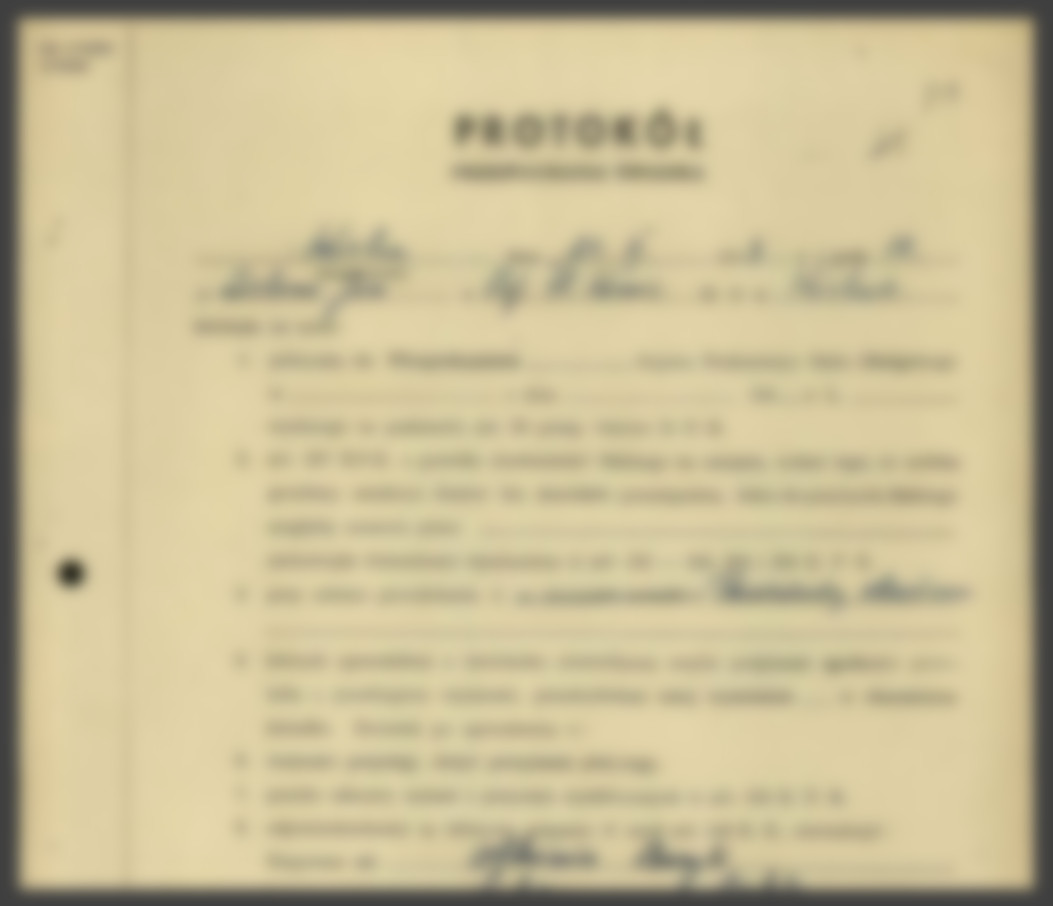
    Były więzień KL Auschwitz opisuje zachowanie Hansa Schumachera, zastępcy szefa magazynu żywnościowego – znęcał się nad więźniami, głodził ich. Świadek opowiada, że podczas rozładowywania chleba często się on kruszył, co więźniowie wykorzystywali i zbierali okruchy. Schumacher o tym wiedział i czatował na więźniów, by móc ich za to pobić.

    Data wydarzenia

    1942.07-1944

    Lokalizacja

    KL Auschwitz-Birkenau

    Ofiary

    Polacy
    Ludność cywilna

    Sprawcy

    SS

    Zbrodnie

    Bicie
    Wyniszczenie biologiczne
    Praca przymusowa

    Miejsce

    Obóz koncentracyjny (Learn more)

    Typ obiektu

    Zeznanie z postępowania sądowego/karnego

    Data utworzenia obiektu

    1947.08.23

    Aktotwórca

    Najwyższy Trybunał Narodowy (Learn more)

    Tytuł teczki

    Akta w sprawie karnej członków byłej załogi SS obozu koncentracyjnego Oświęcim-Brzezinka (Learn more)

    Numery stron

    349-350

    Instytucja udostępniająca

    Instytut Pamięci Narodowej

    Sygnatura instytucji udostępniającej

    IPN GK 196/147

    Medium

    Tekst
    Obraz

Similar testimonies

The same witness:

Wołąsewicz Jerzy

en
Witness

Wołąsewicz Jerzy 17.04.1917, Petersburg (Russia)

Topic

Auschwitz-Birkenau – the German death factory

Date

1940.06.20-1944.09.14

Location

KL Auschwitz-Birkenau

The same subject:

Auschwitz-Birkenau – the German factory of death

en
Witness

Maciejowski Adolf 09.02.1910, Chorzów (śląskie voivodeship)

Topic

Auschwitz-Birkenau – the German factory of death

Date

1943.03-1945.01.18

Location

KL Auschwitz-Birkenau

Nearby location:

KL Auschwitz-Birkenau

en
Witness

Kiełbowska Anna

Topic

Auschwitz-Birkenau – the German factory of death

Date

1942.10.06-1943.03.24

Location

KL Auschwitz-Birkenau

map

${res.getProperty('MapComponent.BorderLoading')}
${res.getProperty('MapComponent.LegendTitle')}
${res.getProperty('MapComponent.LegendPointRed')}
${res.getProperty('MapComponent.LegendPointGrey')}
${res.getProperty('MapComponent.LegendRangeGrey')}
Open in new tab

Bibliographic description and citation


See similar materials at the Pilecki Institute Archives webpage
Report errors

Please describe in a few sentences the problem observed in connection with the object (max. 240 characters):

Historical contexts:
Learn more